

大仲马和小仲马分别是谁
大仲马,(Alexandre Dumas l802~1870) 法国19世纪积极浪漫主义作家。其祖父是候爵德·拉·巴那特里,与黑奴结合生下其父,名亚历山大,受洗时用母姓
仲马。法 国大革命爆发后,亚历山大·仲马屡建奇功,当上共和 *** 将军。大仲
马终生信守共和政见,一贯反对君主专政,憎恨复辟王朝, 不满七月王朝,反对
第二帝国。他饱尝种族歧视,心中受到创伤。家庭出身和经历使大仲马形成了反
对不平、追求正义的叛逆性 格。大仲马自学成才,一生写的各种类型作品达300
卷之多,主要以小说和剧作著称于世。大仲马的剧本《享利第三及其宫廷》 (1
829)比雨果的《欧那尼》还早问世一年。这出浪漫主义戏剧,完全破除了古典主
义“三一律”。大仲马小说多达百部,大都以 真实的历史作背景,以主人公的奇
遇为内容,情节曲折生动,处处出人意外,堪称历史惊险小说。异乎寻常的理想
英雄,急剧发展 的故事情节,紧张的打斗动作,清晰明朗的完整结构,生动有力
的语言,灵活机智的对话等构成了大仲马小说的特色。最著名的是 《三个火 ***
》旧译《三剑客》,(1844)、《基督山伯爵》。大仲马被别林斯基称为“一名
天才的小说家”,他也是马克思 “最喜欢”的作家之一。
1824年7月27,小仲马出生於巴黎。在他诞辰180年之际,我们再一次将目光投向这位颇有才华的法国作家。——
●小仲马(1824—1895):法国著名作家,代表作品有:《茶花女》、《三个坚强的人》、《迪安娜·德·利斯》、《阿尔丰斯先生》、《德尼莎》等。
“我更好的作品就是你”。这是法国著名作家大仲马对他的儿子小仲马说的一句笑话。小仲马也是一位声蜚世界的作家。他是他父亲同一个女裁缝的私生子。7岁时大仲马才认其为子,但仍拒不认其母为妻。私生子的身世使小仲马在童年和少年时代受尽世人的讥诮。成年后痛感法国资本主义社会的 *** 之风造成许多象他们母子这样的被侮辱与被损害者,决心通过文学改变社会道德。他曾说:“任何文学,若不把完善道德、理想和有益作为目的,都是病态的、不健全的文学。”这是他文学创作的基本指导思想。而探讨资产阶级的社会道德问题,则是贯穿其文学创作的中心内容。 “我只想拥有真实的高度”——谈小仲马的创作
作家大仲马和小仲马分别是?
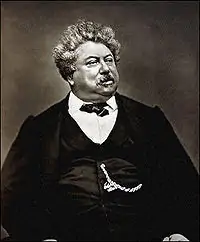
亚历山大·仲马(Alexandre Dumas,1802年7月24日-1870年12月5日)是法国19世纪浪漫主义作家。为区别与他同名的儿子,亦称大仲马(Dumas, père)。大仲马自学成才,一生写的各种著作达300卷之多,主要以小说和剧作著称于世。大仲马信守共和政见,反对君主专政。由于他的黑白混血人身份,其一生都受种族主义的困扰。
大仲马的儿子小仲马也是法国著名的作家,是大仲马贫困时和一名女裁缝卡特琳·拉贝(Marie-Catherine Labay)的私生子,大仲马成名后,混迹于上流社会,将他们母子抛弃掉,直到小仲马七岁时,大仲马终于良心发现,从法律上承认了这个儿子,但是他始终没有承认拉贝是他的妻子,虽然仍担负着拉贝的生活费用。小仲马善于写戏剧,其中《茶花女》等为代表作。
分享相关内容的知识扩展阅读:
亚历山大·仲马的生平与经历
其祖父安东尼-亚历山大·达维·德·拉巴叶特里侯爵曾在法国 *** 任职炮兵总军需官;1760年移居圣多明各(即现在的海地)。1762年3月27日,一个名叫塞塞特·仲马的女黑奴为他生下一个男孩,取名托马-亚历山大,即大仲马之父,受洗时用母姓仲马。大仲马于1802年7月24日生于法国的维勒-科特莱(靠近巴黎)。 法国大革命爆发后,亚历山大·仲马屡建奇功,当上共和 *** 将军。大仲马终生信守共和政见,一贯反对君主专政,憎恨复辟王朝, 不满七月王朝,反对第二帝国。他饱尝种族歧视,心中受到创伤。家庭出身和经历使大仲马形成了反对不平、追求正义的叛逆性格。大仲马自学成材,一生写的各种类型作品达300卷之多,主要以小说和剧作著称于世。 大仲马的剧本《亨利第三及其宫廷》(1829)比雨果的《欧那尼》还早问世一年。这出浪漫主义戏剧,完全破除了古典主义“三一律”。这期间,他创作的《雨》闻名于世。大仲马在奥尔良公爵府上当公务员期间,和与自己原本同住一楼的女裁缝卡特琳·拉贝同居了很长时间。拉贝给他生了个儿子,就是后来在文学声誉上大大超过他的小仲马。这时候,大仲马又和一个戏剧编辑的女秘书好上了,他便抛弃了拉贝。直到七年后他成为巴黎有名的剧作家时,才认下小仲马,但是他始终没有承认拉贝是他的妻子。尽管他后来一直抚养着小仲马,并担负着拉贝的生活费用,但小仲马的内心一直与他有一种说不清的隔阂。特别是大仲马横加干涉小仲马的爱情这件事,给小仲马的心灵深处留下了难以愈合的伤痕。
大仲马68岁时停止写作,因为他爱上了一个漂亮的美国女演员阿达·孟肯。不幸的是,阿达·孟肯在一次演戏时从飞驰的马上掉下来摔死了。
大仲马1802年7月24日生于法国东北部埃纳省的维埃·科特莱,与母亲相依为命,到了十三岁还没念过什么书,后来在公证人事务所当见习生的差。20岁时来到巴黎并开始文学生涯。
1829年创作的剧本《享利三世及其宫廷》使他在文坛上崭露头角。
1844年撰写最为脍炙人口、几乎家喻户晓的是《三个火 *** 》。
1844年至1845年撰写了《基督山伯爵》。
1870年12月5日,大仲马在法国西北部上诺曼底的迪埃普附近乡间去世,享年68岁。
1872年大仲马的灵柩被移往故土安葬。
2002年11月30日,他的遗骸由他的家乡运抵巴黎,移放在名人身后殿堂——巴黎先贤祠,法国总统希拉克和总理拉法兰等人士出席了仪式。
大仲马是第70位进入先贤祠的对法兰西作出非凡贡献的人,也是继伏尔泰、卢梭、雨果、左拉和马尔罗之后第六位进入先贤祠的法国作家。
小仲马遗体进法国先贤祠了吗
没有,大仲马在里面。
小仲马 英语版资料
小仲马及作品简介茶花女故事梗概
Biography
Alexandre Dumas, fils was born in Paris, France, the illegitimate child of Marie-Laure-Catherine Labay (1794 – 1868), a dres *** aker, and novelist Alexandre Dumas. In 1831 his father legally recognized him and ensured the young Dumas received the best education possible at the Institution Goubaux and the Collège Bourbon. At that time, the law allowed the elder Dumas to take the child away from his mother. Her agony inspired Dumas fils to write about tragic female characters. In almost all of his writings, he emphasized the moral purpose of literature and in his 1858 play, Le fils naturel (The Illegitimate Son), he espoused the belief that if a man fathers an illegitimate child, then he has an obligation to legitimize the child and marry the woman.
Dumas' paternal great-grandparents were a white French nobleman and a young black Haitian woman. In the boarding schools, Dumas fils was constantly taunted by his clas *** ates. These issues all profoundly influenced his thoughts, behaviour, and writing.
In 1844 Dumas fils moved to Saint-Germain-en-Laye to live with his father. There, he met Marie Duplessis, a young courtesan who would be the inspiration for his romantic novel, La dame aux camélias (The Lady of the Camellias). Adapted into a play, it was titled in English (especially in the United States) as Camille and is the basis for Verdi's 1853 opera, La Traviata. Although he admitted that he had done the adaptation because he needed the money, he had a huge success with the play. Thus began the playwriting career of Dumas fils which not only eclipsed that of his father during his lifetime but also dominated the serious French stage for most of the second half of the nineteenth century. After this, he virtually abandoned the novel (though his semi-autobiographical L'Affaire Clemenceau (1867) achieved some success).
On 31 December 1864, Alexandre Dumas fils married Nadesjda von Knorring (1826 – April 1895), daughter of Johan Reinhold von Knorring and wife, and widow of Alexander, Prince Naryschkine, whom he married at Moscow and who died in 1864, with whom he had two daughters: Marie-Alexandrine-Henriette Dumas, born 20 November 1860, who married Maurice Lippmann and was the mother of Serge Napoléon Lippmann (1886 – 1975) and Auguste Alexandre Lippmann (1881 – 1960); and Jeanine Dumas (3 May 1867 –), who married Ernest d' Hauterive (1864 – 1957), son of George Lecourt d' Hauterive and wife (married in 1861) Léontine de Leusse. After Naryschkine's death, he married in June 1895 Henriette Régnier de La Brière (1851 – 1934), without issue.
In 1874, he was admitted to the Académie française and in 1894 he was awarded the Légion d'Honneur.
Alexandre Dumas fils died at Marly-le-Roi, Yvelines, on November 27, 1895 and was interred in the Cimetière de Montmartre in Paris. It was, perhaps coincidentally, only some 100 metres away from Marie Duplessis.
------------------------------------------------------------
Alexandre Dumas,1824年7月27日-1895年11月27日)是法国剧作家、小说家。为了与同为作家的父亲作区别,多称小仲马(Dumas, fils),代表作是小说《茶花女》。
生平
小仲马是大仲马与一名女裁缝卡特琳·拉贝(Marie-Catherine Labay)所生下的私生子,生於法国巴黎。大仲马成名后,混迹於上流社会,将他们母子抛弃掉,直到小仲马七岁时,大仲马终於良心发现,从法律上承认了这个儿子。虽然大仲马负担了拉贝的生活费用,但是他始终没有承认拉贝是他的妻子,
1842年小仲马遇见玛丽‧杜普莱西,即后来《茶花女》中玛格丽特的原型,对她一见钟情,但是他对玛丽不肯退出上流声妓事业表示愤怒,写了绝交书。
1847年,玛丽病逝於巴黎。小仲马悲痛万分,将这段故事写成小说《茶花女》,揭露资产阶级道德的虚伪和罪恶,使他一举成名。
1852年小仲马的话剧《茶花女》初演时,大仲马正在布鲁塞尔过著短期的流亡生涯,小仲马给他电报上说:“之一天上演时的盛况,足以令人误以为是您的作品。”大仲马回电说:“孩子,我更好的作品就是你”。1875年2月21日,小仲马以二十二票的多数被选入法兰西学院,在当时是更高荣誉,使他的事业可说是功德圆满,相较於无缘於此的巴尔扎克、大仲马幸运许多。
1895年小仲马续娶了比他小40岁的亨利埃特·雷尼埃,半年后小仲马就去世了。小仲马早年想跻身文坛,但是怎麼写都不成,於是他早就打名妓玛丽的主意,开始搜集写作的素材。在玛丽患肺病咯血期间,他就写成了小说《茶花女》,小仲马一生中都不断的为此忏悔。他的作品往往道德劝说意味过於浓厚,在剧情上反而显得呆板。
作品
小仲马其它有名的戏剧作品包括《半上流社会》(1855)、《金钱问题》(1857)、《私生子》(1858)、《放荡的父亲》(1859)、《克洛德的妻子》(1873)、《福朗西雍》(1887)等。
小仲马的剧作是法国戏剧由浪漫主义向现实主义过渡时期的产物,话剧《茶花女》也被视为法国现实主义戏剧开端的标志。他的剧作不以情节的曲折离奇取胜,而以真切自然的情理感人,结构谨严,语言流畅,富有抒情意味。1897年,翻译家林纾翻释《茶花女》,当时译名为《巴黎茶花女遗事》。
-------------------------------------------------------------
The Lady of the Camellias (French: La Dame aux camélias) is a novel by Alexandre Dumas, fils, first published in 1848.
Adapted for the stage, La Dame aux camélias premiered at the Theatre de Vaudeville in Paris, France on February 2, 1852. An instant success, Giuseppe Verdi immediately set about to put the story to music. His work became the 1853 opera La Traviata with the female protagonist "Marguerite Gautier" renamed "Violetta Valéry".
In the English-speaking world, La Dame aux Camélias became known as Camille and sixteen versions have been performed at Broadway theatres alone. The Lady of the Camellias is "Marguerite Gautier" who is based on Marie Duplessis, the real life lover of author Dumas, fils.
Stage performances
Since its debut as a play, numerous editions have been performed at theatres around the world. The role of the tragic "Marguerite Gautier" became one of the most coveted amongst actresses and includes performances by Lillian Gish, Eleonora Duse, Margaret Anglin, Gabrielle Réjane, Tallulah Bankhead, Eva Le Gallienne, Isabelle Adjani, plus Sarah Bernhardt who played the role in a 1912 film and on the stage in Paris, London and in several Broadway revivals.
Film adaptations
In addition to inspiring La Traviata, The Lady of the Camellias has been adapted for approximately twenty different motion pictures in numerous countries and in a wide variety of languages. The role of "Marguerite Gautier" has been played on screen by Sarah Bernhardt, Clara Kimball Young, Theda Bara, Yvonne Printemps, Alla Nazimova, Greta Garbo, Micheline Presle, Francesca Bertini, Isabelle Huppert and others.
Films entitled Camille
Main article: Camille (film)
To date, there have been at least eight adaptations of The Lady of the Camellias entitled Camille.
Other films based on La Dame aux Camélias
In addition to the Camille films, the story has been the adapted into numerous other screen versions:
* Kameliadamen, the first movie based on the work. Kameliadamen was a 1907 Danish silent film directed by Viggo Larsen and starring Oda Alstrup, Larsen, Gustave Lund and Robert Storm Petersen.
* La Dame aux Camélias, a 1911 French language silent film, directed by André Calmettes and Henri Pouctal. It stars Sarah Bernhardt.
* La Signora delle Camelie, a 1915 Italian language film. It was directed by Baldassarre Negroni and Gustavo Serena. It stars Hesperia, Alberto Collo and Ida Carloni Talli.
* Damen med kameliorna, a 1925 Swedish film adapted and directed by Olof Molander. It stars Uno Henning and Tora Teje.
* La Dame aux Camélias, the first sound adaptation. La Dame aux Camélias was a 1934 French film adapted by Abel Gance and directed by Gance and Fernand Rivers. It stars Yvonne Printemps and Pierre Fresnay.
* Greta Garbo had the starring role in Camille (1936), directed by George Cukor
* A 1944 Spanish language version was produced in Mexico. It was adapted by Roberto Tasker and directed by Gabriel Soria, and stars Lina Montes and Emilio Tuero.
* La Dame aux Camélias, a 1953 French film adapted by Bernard Natanson and directed by Raymond Bernard. It stars Gino Cervi, Micheline Presle and Roland Alexandre.
* Camelia, a 1954 Mexican film adapted by José Arenas, Edmundo Báez, Roberto Gavaldón and Gregorio Walerstein. It was directed by Gavaldón, and stars María Félix.
* La Mujer de las camelias, a 1954 Argentine film adapted by Alexis de Arancibia (as Wassen Eisen) and Ernesto Arancibia, and directed by Ernesto Arancibia. It stars Mona Maris.
* La Dame aux Camélias, a 1980 French language film adapted by Jean Aurenche, Enrico Medioli and Vladimir Pozner, and directed by Mauro Bolognini. It stars Isabelle Huppert.
The story also partly inspired the plot of the movies Pretty Woman and Moulin Rouge!.
Storyline / Content
It is a story of a young man who has an affair with a courtesan, Marguerite. His father ends the affair, and Marguerite dies of tuberculosis.
The Worcester Evening Gazette published an extremely condensed summary of La Dame aux Camélias:
ACT I—PARIS
He—You are sick. I love you.
She—Don't. You can't afford it.
ACT II—PARIS
She—I think I love you. But good-bye; the Count is coming.
He—That man? Then I see you no more. But no! An idea! Let us fly to the country.
ACT III—THE COUNTRY
His Father—You ruin my son! Leave him.
She—He loves me.
His Father—You are a good woman. I respect you. Leave him.
She—I go.
ACT IV—PARIS
She—You again? I never loved you.
He—Fly with me, or I die.
She—I love you; but good-bye now.
ACT V—PARIS
She—(Very sick.) Is it you? Is God so good?
He—Pardon me. My father sent me.
She—I pardon you. I love you. I die. [Dies. Tears. Sensation. Curtain.]
-----------------------------------------------------------------
茶花女(La dame aux camélias),法国作家小仲马最著名的小说之一,於1848年出版。
故事讲述了一个青年人与巴黎上流社会的一位交际花的曲折凄婉爱情故事。
小说《茶花女》情节梗概
贫苦的乡下姑娘玛格丽特来到巴黎开始了卖笑生涯,花容月貌的她被巴黎的贵族争相追逐,成了红极一时的“交际花”,人称“茶花女”(山茶花女士),因为她随身的妆扮总是有一束茶花。
玛格丽特得了肺结核,在矿泉治疗疗养院里遇到一位贵族 *** ,身材相貌和玛格丽特相似,因肺结核第三期不久便过世了,她的父亲摩里阿龙公爵偶然发现酷似他女儿的玛格丽特,便收为义女。公爵答应负担玛格丽特的全部生活费用,只要她能放弃卖笑生涯。但玛格丽特身不由己,公爵便将资助减少了一半,玛格丽特入不敷出,欠下几万法郎的债务。
一天晚上的交际欢场中,邻居勃吕当斯带来的两个青年其中之一阿芒•杜瓦疯狂地爱上了玛格丽特。
玛格丽特生病的一年间,阿芒每天来探问病情,却不留下自己的姓名。勃吕当斯向玛格丽特转述了阿芒对她的一片痴情,她很感动。一天,玛格丽特跳舞时病情突然发作,阿芒关切地劝她不要这样戕害自己,并向她表白爱情,他现在还珍藏着她六个月前丢掉的纽扣。玛格丽特原已淡漠的心灵动了真情,她送给阿芒一朵茶花,以示以心相许。
阿芒真挚的爱情激发了玛格丽特对纯朴生活的热望,她决心摆脱沉沦的巴黎交际花生活,和阿芒到乡下隐居。她计划独自筹一笔钱,支开阿芒。然而阿芒出门时恰巧碰上玛格丽特过去的情人,顿时起疑。他激愤地给玛格丽特写了封信,说他不愿意成为别人取笑的对象,他将离开巴黎。
然而对阿芒来说,玛格丽特是他整个希望和生命,他没有离开巴黎,他跪着请爱人原谅他,玛格丽特对阿芒也真情表白:“你是我在烦乱孤寂的生活中所呼唤的人”。
经过周折两人在巴黎郊外租了一间房子。然而公爵知道了,玛格丽特的经济来源断绝了,她背着爱人典当了自己的首饰、车马换取生活费用。阿芒知道后,打算变卖一笔母亲留给他的遗产,以还清爱人的债务。阿芒收到经纪人要他去巴黎签字的信,阿芒离别爱人。
那封信原来是阿芒的父亲、税务局长杜瓦先生写的,他骗阿芒离开,然后找到玛格丽特,告诉她:他的女儿、阿芒的姊妹与一个体面家庭的公子将要订婚,然而对方家庭听到阿芒和交际花玛格丽特的关系后表示:如果阿芒不和这种风尘女子断绝关系,就要退婚。玛格丽特痛苦地哀求杜瓦先生:让她与爱人阿芒断绝关系,就等于要她的命。可杜瓦先生毫不退让,玛格丽特只好做出牺牲,向杜瓦先生起誓与阿芒绝交。
玛格丽特非常悲伤地给爱人写了绝交信,返回巴黎恢复昔日交际花的荒唐生活。她接受了瓦尔维勒男爵的追求,男爵帮她还清了所有债务,并赎回了首饰和马车。阿芒收到绝交信后怀着痛苦的心情随父亲回到家乡。
阿芒仍深深地思恋着玛格丽特,他又失魂落魄地来到巴黎。
他要报复爱人的“背叛”,他找到了茶花女,处处让她难堪,骂她是无情无义、没良心的娼妇,把爱情当作商品交易。玛格丽特面对爱人的误会,伤心地劝他忘了自己,永不再见。阿芒却要她一同逃离巴黎的欢场,逃到没人认识他们的地方,紧紧守着他们的爱情。玛格丽特说她已经起过誓,她不能那样做;阿芒误以为她和男爵曾海誓山盟,便气愤地推倒玛格丽特,把一叠钞票扔在她身上羞辱她,转身离去。玛格丽特深受 *** ,大叫一声,昏倒在地。
玛格丽特身心俱疲,一病不起。男爵与阿芒决斗受了伤,阿芒离开了法国。
圣诞节快到了,玛格丽特的病情日疴,脸色苍白,无人探望,倍感孤寂。杜瓦先生来信感谢她信守誓言,已写信把真相告诉了阿芒,现在玛格丽特唯一的希望就是能再见爱人一面。
临死前,茶花女的债主们纷纷上门,催逼还债。债务法庭执行官奉命查封了她的全部财产,只等她死后就拍卖还债。弥留之际,玛格丽特不断地呼喊着爱人的名字,“眼里淌下无声的眼泪”,她最终也没能再见爱人一面。
玛格丽特死后只有一个好心的邻居米利将她入殓。阿芒重回巴黎后,米利把茶花女的一本日记交给了他。至此,阿芒才知道了她高尚的心灵。日记中写道:“除了你的侮辱是你始终爱我的证据外,我似乎觉得你越是折磨我,等到你知道真相的那一天,我在你眼中也就会显得越加崇高。”
阿芒怀着无限的悔恨与惆怅,为爱人玛格丽特迁坟安葬,并在她的坟前摆满了白茶花。
其他相关作品
光绪二十三年(1897年),林纾翻译与王寿昌合译小仲马《巴黎茶花女遗事》,光绪二十五年一月在福州由畏庐刊行。是中国介绍西洋小说的之一部,一时风行全国。
歌剧《茶花女》
著名作曲家威尔第根据小仲马的这部小说改编的歌剧《茶花女》(La traviata)
好莱坞电影
好莱坞1936年根据该小说改编成电影《茶花女》(Camille)
电影《红磨坊》(Moulin Rouge!)(2001):其中男女主人公的爱情情节——相恋——误解——消除误解——女主角病逝——,取材于小仲马的这部小说。